
Key Takeaways
- A weekly time audit that logs activities as they happen, grouped into simple categories, can reveal where planned hours and actual hours drift apart
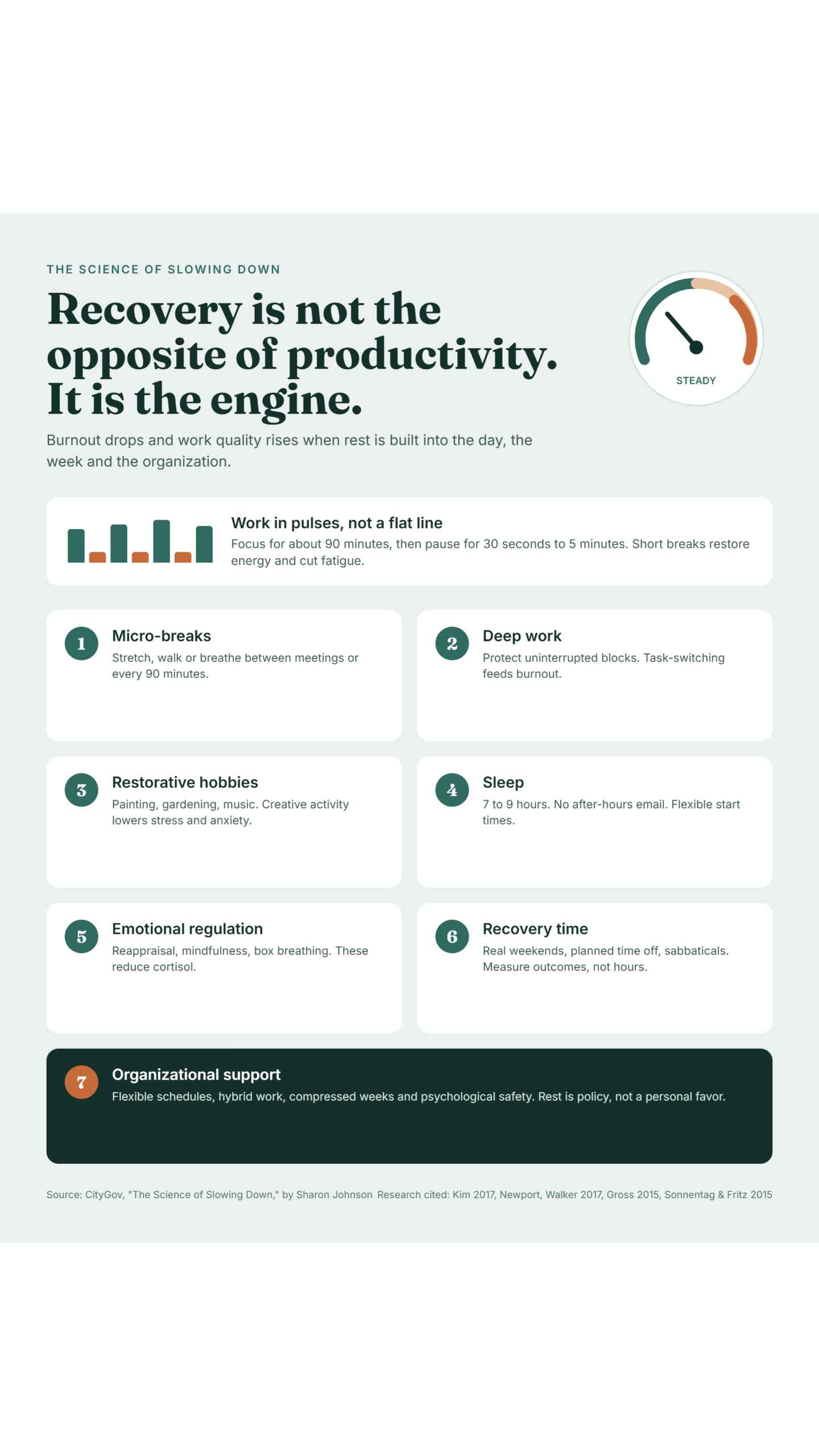
- Scheduling short breaks between focus blocks and leaving room for overruns helps a workday stay realistic instead of constantly running behind
- Progress holds more meaning when it is measured by completed output, such as proposals written or calls finished, rather than hours logged alone
- Comparing a week’s plan against what actually happened makes it easier to decide what to delegate, automate, or drop altogether
- A repeatable system built around time audits, planned breaks, and weekly logs can help service-business owners build a sustainable workday
A sustainable workday rarely happens by accident. It gets built, one week at a time, through small habits like writing down where time actually goes, scheduling real breaks, and checking whether the hours spent match the results produced. For service-business owners juggling client work, team management, and their own to-do list, this kind of structure can feel like a luxury. It stands out as one of the simplest ways to protect energy and still grow a business without stretching the day longer.
What A Time Audit Reveals
A time audit is a simple practice: write down what happens during the workday, then look back at the pattern. Done honestly, it often exposes a gap between where a business owner planned to spend time and where the hours actually went. A calendar might show two hours blocked for strategy work, but the audit might reveal that client emails and last-minute requests ate up most of that block instead.
This gap matters because it is hard to fix a problem that stays invisible. Once calendar entries are categorized and totaled at the end of the week, patterns start to show up clearly: too many meetings, not enough deep work, or breaks that never actually happen. Pairing a time audit with planned breaks and a recurring weekly log gives service-business owners one system to follow instead of three separate habits to juggle, a method The Real John Briggs builds its approach around.
The real value of an audit sits in what the data makes possible: spotting low-value tasks, protecting time for the work that actually grows the business, and catching burnout patterns before they become a bigger problem.
How To Run A Weekly Time Audit
Running a time audit does not require fancy software or a complicated system. It requires consistency and a willingness to look at the results without judgment.
Log Activity As It Happens
Recording tasks in the moment works better than trying to reconstruct a day from memory. Daily time entries capture far more accurate detail than any end-of-week recollection, since most people underestimate how much time gets lost to small interruptions. A simple method works best here: jot down the start time and a short label for each activity, in 15- to 30-minute blocks, as the day unfolds.
Group Entries Into Clear Categories
Once entries are logged, sorting them into categories makes the data usable. Common categories include focused work, meetings, administration, email, and breaks. Keeping these categories short and consistent matters more than making them detailed, since a system that is too complicated tends to get abandoned by the second week.
Include Breaks And Interruptions, Not Just Tasks
A log that only tracks planned work misses half the picture. Breaks, context switching, and interruptions belong in the audit too, since they reflect the actual workday rather than just the parts that went according to plan. Leaving these out can make a schedule look more efficient on paper than it really is, which defeats the purpose of auditing in the first place.
Scheduling Focus Blocks And Breaks
Once a week or two of audit data exists, the next step is building a schedule that reflects reality instead of wishful thinking.
Prioritize Before Blocking Time
Time blocking works best when the most important tasks are identified before any blocks go on the calendar. Deciding what matters first, then assigning time to it, keeps the schedule anchored to real priorities instead of whatever request arrived most recently. Skipping this step often leads to a calendar that looks full but accomplishes little of real value.
Build In Short Breaks Between Blocks
Short breaks of 5 to 15 minutes placed between focus blocks give the brain room to reset before the next task begins. These breaks can be as simple as stepping away from a screen, stretching, or walking around the room. Treating breaks as scheduled appointments, rather than something that happens if time allows, makes it far more likely they actually happen.
Leave Room For Overruns And Transitions
No schedule survives contact with a real workday without some flexibility. Building in buffer time for overruns and transitions keeps one late meeting from derailing the rest of the day. When a task runs long, moving the unfinished portion to a later block tends to work better than stretching the current block and pushing everything else back.
Judging Progress By Output, Not Hours
Hours logged tell only part of the story. A business owner who works a nine-hour day is not necessarily more productive than one who works six, and tracking time alone cannot distinguish between the two.
Pair Activity Metrics With Output
Activity on its own does not equal results. Pairing hours logged or activity measures with actual output, quality, and progress toward goals paints a fuller picture of what is working. A week full of meetings might look busy on a calendar, but the better question is whether those meetings moved anything forward.
Track Output Per Hour For Clear Deliverables
For work with clear, countable deliverables, tracking output per hour can set a useful baseline. Proposals written, reports completed, or calls made are all examples of deliverables that can be measured against the time invested. This kind of tracking makes it easier to spot when a task is taking longer than it should, or when a process has quietly become more efficient over time.
Turning Weekly Logs Into Changes
A log that never gets reviewed is just a pile of data. The real payoff comes from using the information to make decisions.
Compare Planned Time Against Actual Time
Setting aside a regular block of time each week, often somewhere between 20 and 30 minutes, to compare the planned schedule against what actually happened can surface surprising patterns fast. Maybe focused work consistently gets pushed later in the day, or maybe meetings run longer than expected every single week. These patterns are easy to miss day-to-day but become obvious once a week of data sits side by side with the original plan.
Decide What To Delegate, Automate, Or Stop
Once patterns are visible, the next step is action. A weekly review can help identify which tasks should be handed off to someone else, which ones could be automated, and which ones should simply stop. This is also the point where strategic work gets protected before the calendar fills up with smaller demands that feel urgent but matter less in the long run.
Consistent Tracking Builds A Sustainable Workday
None of these practices work as one-time fixes. A time audit done once provides a snapshot; a time audit repeated weekly, alongside planned breaks and a regular review, becomes a system. Reviewing the same method, with the same categories, on the same schedule, makes the data far more useful over time than a one-off experiment.
The goal is a workday that holds up under pressure, leaves room for real breaks, and gets judged by what actually gets finished rather than how many hours the lights stayed on. For service-business owners trying to grow without extending their hours, that shift in perspective often matters more than any single productivity trick.
Building this kind of rhythm takes practice, but starting with a simple weekly time audit can make the rest of the process far easier to sustain.
The Real John Briggs
38 13775 South #210
Draper
Utah
84020
United States


