
X-SENSE is designed to describe where a heat alarm could be used in conjunction with an existing fire protection system to supplement the smoke detection in the home, where smoke is suspected or where a smoke alarm may not be practical due to dust, steam, and fumes.
Although smoke alarms are an essential component of home fire problems, all rooms in a home are not the same. Some garages and utility or basement spaces may have varying environmental conditions compared to bedrooms and living areas; cooking fumes and steam may arise in the kitchen areas, and some spaces may have vehicle-related particles, which may present different environmental conditions.
A heat alarm can be used as an alternate method of fire detection in some areas.
A heat alarm is triggered by changes in temperature, unlike a smoke alarm, which is triggered by smoke particles, based on the operating specification of the devices. That difference makes heat detection useful in selected areas where the smoke detection is more likely to trigger an unwanted alarm due to normal activities.
Heat alarms are not a substitute for the proper installation of smoke alarms. When installed in the right locations, however, they can be part of a larger household fire safety strategy.
Why Heat Detection Is Different
This is a difference between smoke detection and heat detection.
If a fire starts before temperatures are high enough to activate a heat alarm, then smoke will be generated. This is one of the reasons why smoke alarms are still recommended for sleeping areas, hallways, or any other area where early warning is needed.
Heat alarms are for different purposes. They are designed to react to the ambient air temperature when it reaches a certain state called by the alarm design.
They can be beneficial in areas where smoke, steam, or particles from regular activities could cause problems with conventional smoke.
Companies such as X-SENSE now offer different types of residential monitoring equipment, allowing homeowners to consider smoke, carbon monoxide, heat, and other household risks as separate parts of a wider safety system.
Kitchens Can Present a Different Detection Challenge
One of the most obvious reasons, of alarm type and placement, is in the kitchen.
Regular cooking generates smoke, steam, and airborne particles even if not in an emergency. Smoke alarms that are located near normal cooking may thus be compromised by normal cooking.
Locating a heat alarm where it is most pertinent in the kitchen is possible as it is not smoke particle sensing.
This doesn’t necessarily mean a heat alarm should be used in every kitchen. Placement can be influenced by the local fire-safety requirements and distance from appliances or the position of the ceiling.
Ensure you follow the instructions provided by the alarm manufacturer and local regulations and NOT by placements for ease of use.
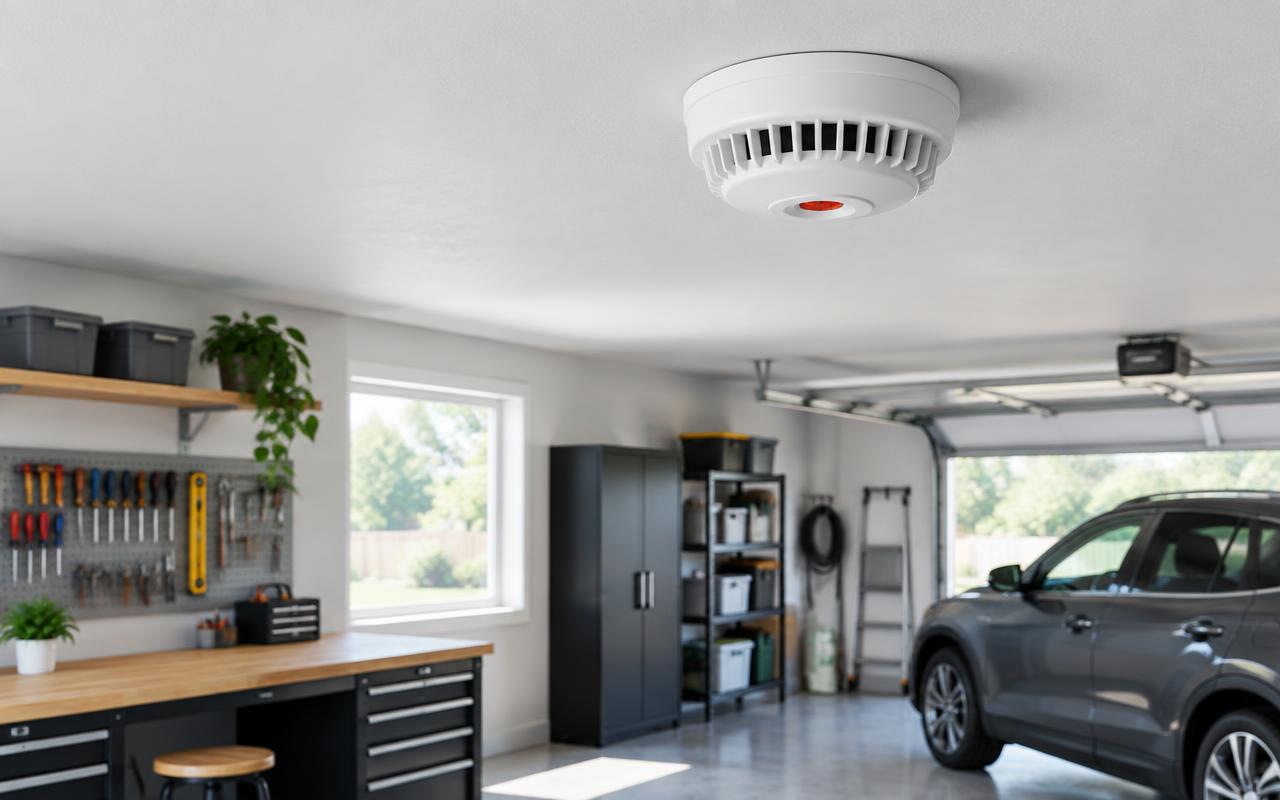
Garages May Also Benefit From Heat Monitoring
Conditions in garages may vary considerably from those found in the house.
Some types of smoke alarms may not be well suited to the environment due to dust, exhaust particles, temperature changes, and working conditions. Garages can also have cars, electrical equipment, stored materials, chargers, or anything that still has the potential to become a fire hazard.
An appropriately set-up heat alarm can provide another monitoring capability in this space.
Other spaces, such as basements, can have similar concerns depending on their use and conditions within.
The objective should not be to install one type of alarm in all places. A more sensible approach is to apply their own insight to each part of the premises as to what the nature of the risk and environment might be.
Interconnected Systems Can Extend a Warning
Location creates another challenge in larger homes.
An alarm activated in a garage, basement, or distant utility area may be difficult to hear from a bedroom on another floor. An interconnected system can help by allowing compatible alarms to communicate through a wider home-safety network.
The X-SENSE XH02-M heat detector is designed for this type of setup. According to current product information, the XH02-M connects through the X-Sense SBS50 base station and can form part of an interconnected alarm system. The device also supports smart-app functionality through a 2.4 GHz Wi-Fi connection.
X-Sense identifies kitchens, basements, and garages as potential areas of use for the model. The alarm uses a Class A1 thermistor and is currently specified with a seven-year sealed battery.
For homeowners considering connected equipment, compatibility should be checked before adding devices. The XH02-M requires the SBS50 base station, so it should be planned as part of the appropriate X-Sense system rather than treated as a completely independent smart alarm.
Smart Features Can Improve Awareness
Suddenly, alarms with connections will be able to dispense information not just from a single alarm but from multiple alarms.
App-connected equipment enables homeowners to get alerts or monitor compatible devices on their phones depending on the system used. This is sometimes useful when an alarm is placed in a garage, basement, or other part of the property not used on an everyday basis.
However, connectivity should not be considered as a means to achieving fire safety.
Even if there is an app, the physical alarm is significant, as is the proper installation, maintenance, and a house emergency plan.
Correct Placement and Maintenance Still Matter
Fitting a heat alarm does not mean that routine checks are not required.
Homeowners should be following the manufacturer’s instructions when it comes to testing, maintenance, battery life, and even the eventual replacement of the device. They should also not paint over, cover, or put objects on in such a way that it could mask the alarm function.
Remodels can make the installation of alarms a good idea too. Man-made modifications to heating systems, changes in light fixtures, and any alterations to the kitchens or workshops in a garage can affect the conditions of an area. Any changes to the light fixtures, heating or utility systems in a workshop, remodel, or make in the kitchen of a garage can change the conditions in an area.
Fire-safety equipment provides the best protection when it accurately represents the actual use of a property.
Building a More Complete Home-Safety System
No single “all-purpose” alarm is capable of measuring all household dangers.
The different types of monitoring devices serve distinct functions. The planned system takes those differences into account instead of expecting one device to work for all.
In some circumstances, heat alarms are helpful in providing coverage where regular smoke alarms are not feasible, such as close to any exit or where smoke sources like light fixtures, dust, or steam are likely to result from environmental conditions. They complement each other; when lit they provide extra awareness, but when installed they still do their job, and that is smoke and carbon monoxide alarms elsewhere in the house.
The most useful questions when evaluating these protections, however, are not how many alarms the homeowner owns, but rather, is the proper type of detection in the proper places?
About X-SENSE Innovations
Founded in 2013, X-SENSE Innovations operates from its registered U.S. address at X-SENSE USA LLC, 1209 Orange St, Wilmington, DE 19801, and specializes in developing certified home fire and safety solutions for residential environments.
The company focuses on producing professional and user-friendly safety devices, including domestic fire alarms such as smoke, carbon monoxide, and heat alarms, as well as smart home safety systems covering fire protection, intrusion detection, and indoor environment monitoring.
More information is available at https://www.x-sense.com/.
Media Details
Contact Person Name: Farrukh
Company Name: X-SENSE
Email: service@x-sense.com
Website: https://www.x-sense.com/
Phone: +1 (833) 952-1880


