ZHUZHOU, HUNAN, CHINA, October 14, 2026 /EINPresswire.com/ — Driving Smart Processing toward higher levels of efficiency requires advanced thermal solutions, particularly in the manufacturing of high-load industrial components. Modern industrial production increasingly relies on precision thermal technologies, making the selection of reliable equipment and partners critical for long-term operational success. As global manufacturers seek out robust components, partnering with a qualified Wholesale Induction Brazing Equipment Supplier from China has become a cornerstone for scaling production while maintaining strict metallurgical standards. Induction brazing technology utilizes electromagnetic induction to heat metals locally, allowing filler metals to flow into joint gaps via capillary action. This method ensures exceptional joint integrity, minimal thermal distortion, and superior electrical conductivity compared to traditional torch or furnace brazing.
Evaluating Induction Brazing Equipment and Procurement Factors
Evaluating induction brazing equipment for next-generation manufacturing involves looking beyond basic heating capacity. Engineers and procurement teams must carefully assess critical parameters such as power output ratings (ranging from 100kW to 600kW), operational frequencies (typically 3 to 15 kHz), workpiece diameter compatibility, and maximum material thickness. For instance, applications involving large motor rotor end rings, heavy coil joints, or shield tunneling cutting teeth demand specific power-to-frequency ratios to achieve uniform heating temperatures around 850 degrees Celsius without compromising the base material’s mechanical properties. Material matching—such as accommodating silver-based or copper-based alloy brazing materials—is another deciding factor that directly dictates joint strength and thermal conductivity. Common causes of procurement failure often stem from mismatched power supplies, inadequate cooling units, or a lack of process support, which lead to weak joint penetration, micro-cracking, or premature electrical failure under heavy traction and vibration loads. To mitigate these risks, procurement specialists must verify supplier capabilities through rigorous criteria, including ISO9001 quality control certification, independent patents, and proven case histories in demanding sectors like railway traction, marine engineering, and heavy mining machinery.
Technical Heritage and Engineering Excellence
Integrating robust technical design with proven manufacturing heritage, CPIE has emerged as a key contributor in the thermal processing landscape. Headquartered in Zhuzhou’s industrial hub since 2014, the enterprise leverages a team of senior engineers with over ten years of industry expertise to deliver high-performance metal processing technologies. The company’s comprehensive portfolio extends from induction heating and vacuum metallurgy to advanced atomizing equipment, serving diverse heavy industries worldwide. Their commitment to innovation-driven engineering is underscored by more than 20 independent patents and strict adherence to international quality management standards.
System Architecture and Industrial Applications
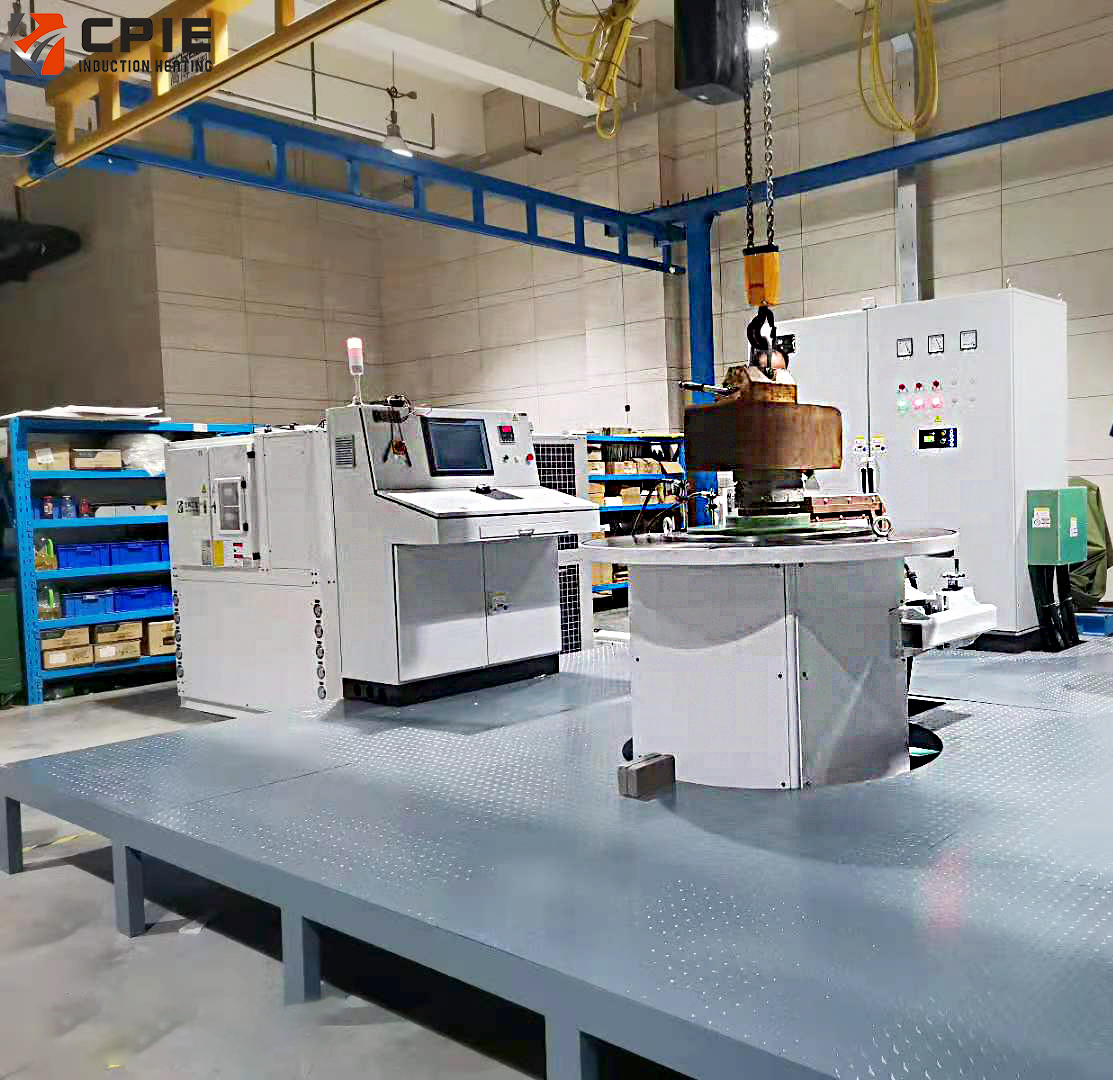
Within the realm of specialized joining solutions, CPIE’s wholesale induction brazing equipment exemplifies precision engineering tailored for complex industrial environments. The system architecture typically integrates a transistor variable frequency power supply, an intermediate frequency brazing transformer, high-accuracy infrared thermometers, customized induction heaters, and stable water-cooling units. These systems are extensively utilized for copper brazing of large and medium-sized motor components, electrical contacts, and shield tunneling tools deployed in railway, marine, and road construction machinery. By supporting both integral and segmented brazing modes, the equipment addresses critical challenges in high-stress applications where joint failure is not an option.
Frequently Asked Questions About Induction Brazing Equipment
What is an induction brazing machine and why do European and North American manufacturers prefer it for heavy-duty components?
An induction brazing machine is an advanced thermal processing system that uses electromagnetic fields to create localized, rapid heat within metal joints. Manufacturers across Europe and North America favor this technology because it eliminates open flames, reduces energy consumption, minimizes thermal distortion, and delivers repeatable joint strength required for high-stress railway and marine equipment.
How do I choose between 100kW and 600kW power outputs for large motor rotor end rings?
Selecting the right power output depends directly on the workpiece diameter and thickness. Smaller components or thinner rings generally require a 100kW to 1600kW system operating at higher frequencies, whereas massive motor end rings up to 1500mm in diameter require 500kW to 600kW systems to ensure uniform heat penetration up to 850 degrees Celsius.
Can induction brazing equipment handle both silver-based and copper-based alloy materials without damaging the base metal?
Yes. Modern induction brazing systems feature adjustable transistor variable frequency power supplies and precise infrared temperature monitoring. This allows operators to accurately control heating speeds and temperatures to accommodate both silver-based and copper-based brazing filler metals, ensuring strong capillary flow without overheating or degrading the base material.
What cooling and power stability requirements are needed when operating induction brazing equipment in high-ambient-temperature regions like the Middle East or Southeast Asia?
Operating in regions with high ambient temperatures requires robust, high-capacity water-cooling units and stable voltage regulation. Equipment deployed in these markets must feature closed-loop cooling circuits to prevent thermal overload of the power transistors and transformers during continuous heavy-duty industrial cycles.
What are the most common causes of induction brazing failure, and how can international buyers verify supplier capability?
Common failures result from mismatched frequency settings, poor cooling efficiency, or incorrect filler metal selection leading to weak joint penetration. International buyers can mitigate these risks by partnering with manufacturers holding ISO9001 certifications, proven export experience, independent patents, and transparent technical documentation.
Optimizing Production with Tailored Solutions
Achieving optimal performance in advanced component manufacturing requires aligning specific operational demands with tailored thermal solutions. For industrial facilities seeking to upgrade their metal processing lines with reliable, high-efficiency induction brazing systems, evaluating equipment based on precise power specifications, cooling capacity, and material compatibility ensures long-term operational stability.
To explore tailored equipment configurations and technical specifications for your specific production requirements, visit the official website at https://www.zzhhgy.com/.
CPIE
CPIE
Legal Disclaimer:
EIN Presswire provides this news content “as is” without warranty of any kind. We do not accept any responsibility or liability
for the accuracy, content, images, videos, licenses, completeness, legality, or reliability of the information contained in this
article. If you have any complaints or copyright issues related to this article, kindly contact the author above.

Media gallery